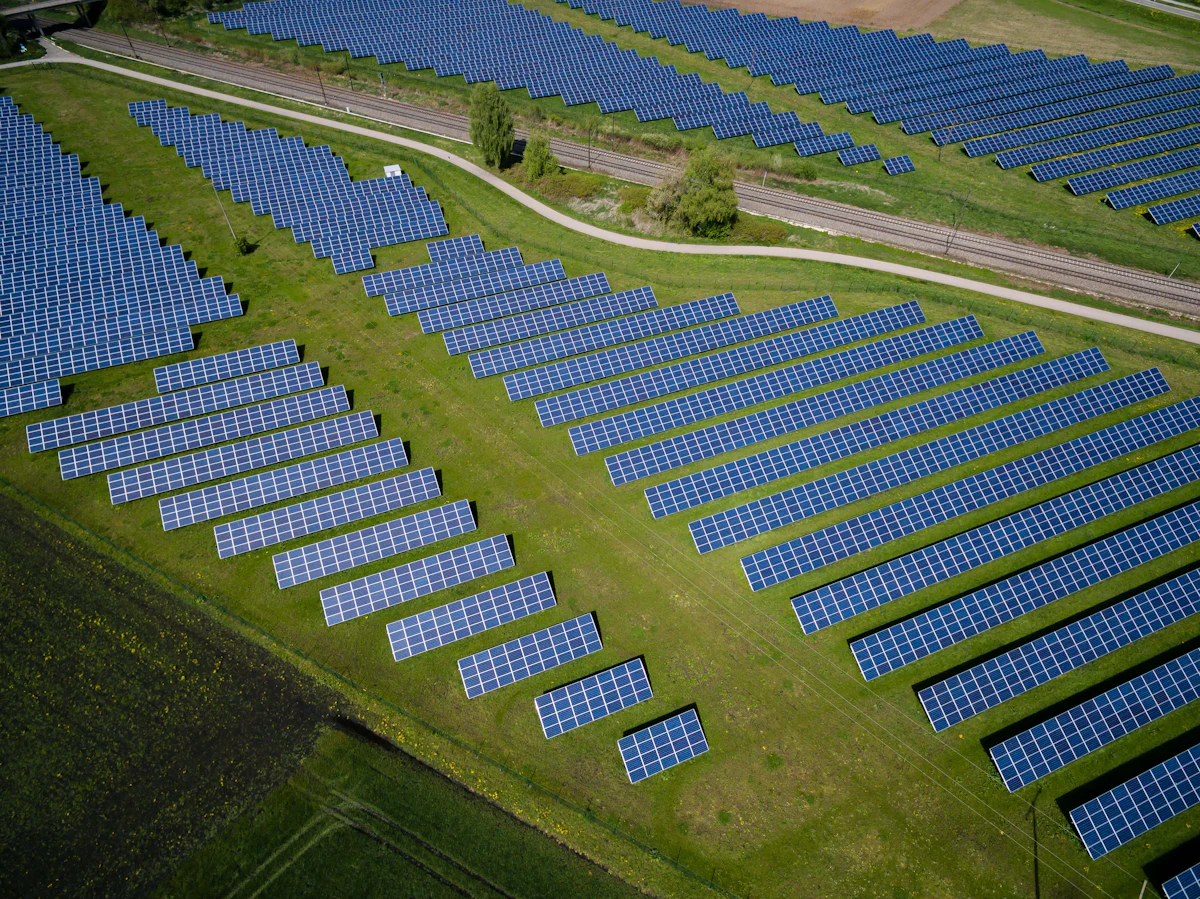
Five years ago, polycrystalline panels were the budget-friendly default on Nigerian rooftops. In 2026, that equation has flipped. Mono PERC and TOPCon cells have dropped sharply in price while poly has stagnated. If someone is quoting you poly panels today, ask why — the honest answer is usually that they have old stock to clear.
What Makes Them Different?
- Monocrystalline: Cut from a single silicon crystal (Czochralski process). Uniform dark appearance. Higher purity → higher efficiency (19–23%). Better performance at high temperatures and in diffuse (cloudy/harmattan haze) light.
- Polycrystalline: Cast from multiple silicon fragments. Speckled blue appearance. Lower purity → lower efficiency (15–17%). Higher temperature coefficient means bigger output drops on hot afternoons.
- N-Type Mono (TOPCon / HJT): Premium variant of monocrystalline using an N-doped wafer. Highest efficiency, lowest degradation, best shade tolerance. Examples: Jinko N-Type range, Astronergy TOPCon N5.
- Bifacial Mono: Captures light on both faces. 5–15% extra yield on reflective surfaces. Example: Jinko 590W N-Type Bifacial.
How They Perform Under Nigerian Conditions
Two conditions punish polycrystalline panels in Nigeria. First, heat: on a typical Lagos afternoon (35–40 °C ambient, panel surface ~65 °C), every extra degree above 25 °C cuts output by the panel's temperature coefficient. Poly's coefficient is typically -0.40%/°C versus mono PERC at -0.35% and N-Type TOPCon at -0.28%. Over thousands of afternoon hours, that difference accumulates into real kWh lost. Second, low-light conditions from harmattan haze: mono cells — especially N-Type — maintain a higher proportion of rated output under diffuse irradiance compared to poly.
The Price Argument — Is Poly Still Cheaper?
In the Nigerian wholesale market as of mid-2026, quality mono PERC and entry-level poly panels have converged to within a few percent per watt — and in many cases mono is now cheaper per watt because manufacturers have wound down poly production lines. When you factor in the higher wattage per panel (fewer units, less racking, less wiring labour), mono almost always wins on total installed cost per kWp.
Our Recommendation for Nigerian Roofs
- Best overall value: Canadian Solar Hiku7 665W Mono PERC — highest wattage per panel, fewer mounting points, excellent 25-year linear warranty.
- Best efficiency per m²: Jinko 620W N-Type — TOPCon technology, ideal when roof space is limited.
- Best for flat rooftops: Jinko 590W N-Type Bifacial — bifacial gain is measurable on white-painted Lagos/Abuja flat roofs.
- Mid-range proven: Itel 590W Mono PERC — familiar brand, solid PERC cell, good warranty support in Nigeria.
- Compact add-on: Astronergy TOPCon N5 480W — TOPCon in a smaller frame, suits partial expansions.
- Avoid: Any poly panel. There is no performance or price case for polycrystalline in a new installation today.
We stopped stocking polycrystalline panels entirely because no serious installer in Nigeria is specifying them for new projects. The mono PERC and TOPCon lines simply win on every metric that matters for a 25-year investment.